

Choosing the right jeweller for a custom piece is one of the most important decisions you will make during an engagement, wedding, or milestone celebration. A custom jeweller is a skilled artisan who designs and handcrafts one-of-a-kind jewellery to a client's exact specifications, rather than selling mass-produced items from a display case. The wrong choice can mean a disappointing result and wasted money, while the right partnership produces a piece you will treasure for decades. This guide walks you through the key factors to evaluate, from craftsmanship credentials to aftercare services, so you can choose with confidence.
Why Choosing a Custom Jeweller Matters
Custom jewellery, also known as bespoke jewellery, is created according to the specific preferences and requirements of an individual, unlike mass-produced pieces. The process involves direct collaboration between you and the jeweller, which means the relationship is just as important as the ring itself. When you purchase a custom engagement ring, you are entering into a long-term relationship with that jeweller for cleaning, maintenance, and potential future commissions.
An independent jeweller who specialises in bespoke work can guide you through metal selection, stone options, and design details that a chain retailer simply cannot. At Joseph George in Melbourne's CBD, for example, every ring is made to order with one-on-one guidance from a jeweller with over 40 years of experience.
Evaluate Experience and Craftsmanship
Experience is a non-negotiable factor. A jeweller with decades of hands-on benchwork understands how metals behave, how stones interact with settings, and how a ring will age over years of daily wear. Look for someone who can discuss techniques like hand fabrication, casting, and CAD design with equal confidence.
In-House Design Capability
It is important that CAD work and stone setting are done in-house. If design changes must be relayed to an outsourced company, details are often lost and the process does not run as smoothly. A studio like Joseph George Jewellery combines 3D-printed design prototyping with traditional hand-finishing techniques, delivering precision and artisan craftsmanship in the same piece.
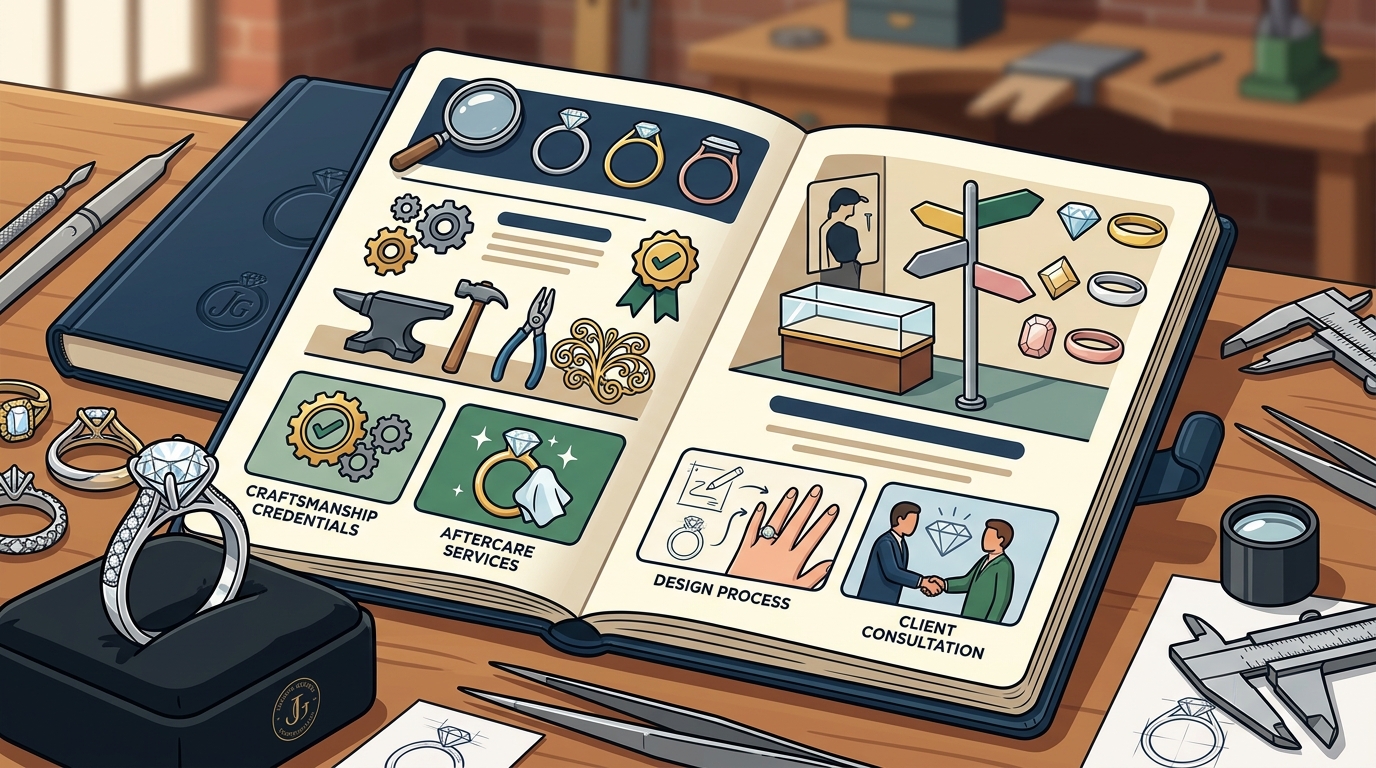
Stone Setting Proficiency
Stone setting is one of the most important aspects of fine jewellery. Your jeweller should be proficient in multiple styles, including bead setting, channel, pave, and prong settings. Properly set stones make the difference between a piece that performs well over the years and one that causes ongoing problems.
Review Their Portfolio and Past Work
Ask to see examples of completed custom pieces, not just CAD renderings. A diverse portfolio gives you confidence in the jeweller's ability to create everything from classic solitaires to contemporary designs. Pay attention to whether their aesthetic aligns with your taste.
Browse the engagement ring collections or women's ring archive to see the breadth of styles a jeweller has executed. The depth of the portfolio signals design versatility and genuine experience.
Understand the Design Process
A bespoke process is a structured collaboration that should feel personal, not pressured. The starting point is usually a conversation about how you live, what you already wear, what matters to you, and where your budget sits. From there, the design takes shape through sketches, proportions, and modern visual tools.
Timeline Expectations
Custom jewellery takes time. An average timeline might be two to five weeks, while more complex projects can take up to six weeks or longer. If you are planning a proposal or wedding, begin the process at least three months before you need the finished piece.
Budget Transparency
A reputable jeweller provides an itemised quote covering metal weight, stone costs, and labour before any work begins. Be upfront about your budget from the start. A good jeweller can guide material and design choices accordingly without compromising the integrity of the piece. Learn more about pricing factors in this custom wedding ring guide.
Check Certifications and Stone Sourcing
A certification is a formal credential indicating a jeweller has completed recognised training in gemology or jewellery design. The Gemological Institute of America (GIA), founded in 1931, is the world's foremost authority on diamonds, coloured stones, and pearls. When purchasing diamonds, ask whether they come with a GIA Diamond Report grading the 4Cs: cut, colour, clarity, and carat weight.
Ethical sourcing is equally important. A trustworthy jeweller should know where their diamonds and gemstones come from and be willing to discuss it openly. Conflict-free diamonds, recycled metals, and responsibly sourced coloured stones are increasingly expected by informed buyers. Joseph George works with precious coloured gemstones including sapphires, rubies, and emeralds, sourced with care.
Ask About Warranties and Aftercare
A custom ring is not a one-time transaction. Over the years you will return for cleaning, resizing, re-polishing, and maintenance. Ask what kind of warranty the jeweller offers on materials and craftsmanship. Joseph George's custom-made engagement rings, for instance, come with a lifetime guarantee on materials and craftsmanship, plus a complimentary cleaning and polishing service.
Aftercare services such as resizing and re-polishing should be part of the long-term relationship. As the American Gem Society advises, selecting a jeweller you can trust for the long term is just as important as selecting the right stone.
Jeweller Comparison Checklist
| Criteria | What to Look For | Red Flag |
|---|---|---|
| Experience | 10+ years of hands-on benchwork; named designer | Vague background; no named craftsperson |
| Design Process | In-house CAD; sketches and prototypes shown | Outsourced design with no client involvement |
| Portfolio | Diverse completed pieces; photos and in-person samples | Only CAD renders; no finished work shown |
| Stone Certification | GIA or AGS diamond reports provided | No third-party grading; verbal claims only |
| Ethical Sourcing | Conflict-free policy; transparent supply chain | Refuses to discuss origins |
| Warranty | Lifetime or multi-year guarantee on craftsmanship | No written warranty; vague terms |
| Aftercare | Cleaning, resizing, and re-polishing included | No post-sale services offered |
| Consultation Style | Collaborative; listens to lifestyle and budget | Pressure tactics; aggressive upselling |
Key Takeaways
- A custom jeweller should have verifiable, hands-on experience spanning many years, not just retail sales credentials.
- Always review a portfolio of finished pieces, not only digital renderings.
- Ensure CAD design and stone setting are performed in-house for better quality control.
- Ask for GIA or AGS diamond reports to independently verify stone quality.
- Discuss ethical sourcing openly; a reputable jeweller will welcome these questions.
- Confirm warranty terms and aftercare services in writing before commissioning work.
- Start the custom process at least three months before you need the finished piece.
Frequently Asked Questions
What is a custom jeweller?
A custom jeweller is a professional who designs and handcrafts jewellery pieces from scratch to meet a client's specific vision, style, and budget. Unlike retail jewellers who sell pre-made stock, a custom jeweller collaborates with you throughout the entire creation process.
How long does it take to make a custom ring?
Most custom rings take between three and six weeks from design approval to completion. More intricate designs with rare stones may take longer. It is wise to allow at least three months if you have a firm deadline such as a proposal or wedding date.
Is custom jewellery more expensive than buying off the shelf?
Not necessarily. While some bespoke pieces cost more due to personalised design and labour, you avoid broad retail mark-ups. A simpler bespoke ring in platinum or 18k gold can feel far more luxurious than a mass-produced piece at a similar price point.
What certifications should I look for in a jeweller?
Look for jewellers with training credentials from the Gemological Institute of America (GIA) or membership in professional bodies like the American Gem Society (AGS). For diamonds, always request a GIA Diamond Report verifying cut, colour, clarity, and carat weight.
How do I verify a diamond's quality independently?
Ask the jeweller for the GIA report number and verify it on the GIA's official online database. GIA-graded diamonds also have a tiny laser inscription on the girdle that matches the certificate number, which can be confirmed under magnification.
What questions should I ask during a jeweller consultation?
Ask about their design process, whether work is done in-house, what metals and stones they recommend for your lifestyle, their warranty policy, turnaround time, and whether you can see examples of similar completed pieces.
Why does ethical sourcing matter when choosing a jeweller?
Ethical sourcing ensures the gemstones and metals in your jewellery are obtained without exploitation or environmental harm. Conflict-free diamonds and responsibly mined coloured stones align your purchase with your values and support responsible industry practices.
Can a custom jeweller work within a tight budget?
Yes. A skilled custom jeweller can adjust stone size, metal choice, and design complexity to stay within your budget without compromising structural integrity or beauty. Being transparent about your price range from the first consultation leads to better outcomes.
Ready to Find Your Perfect Custom Jeweller?
If you are looking for a bespoke engagement ring, wedding band, or meaningful custom piece crafted with over 40 years of expertise, book a consultation with Joseph George Jewellery in Melbourne's Collins Street. Every piece is designed and handcrafted to reflect your story, your style, and your values.