
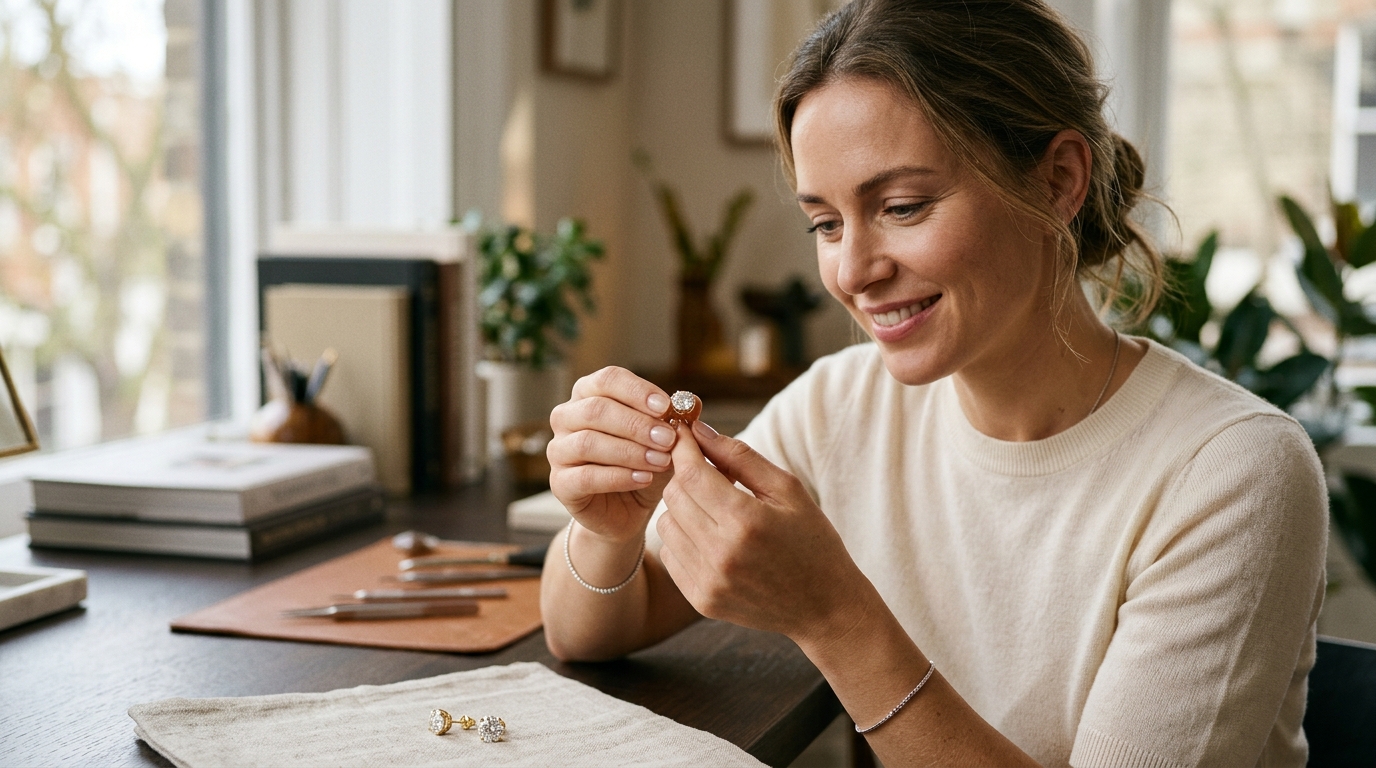
Whether you are treating yourself or choosing a meaningful gift, knowing what to look for when buying high-quality earrings saves you from costly mistakes and ensures lasting value. Quality earrings are defined by their metal purity, gemstone grade, craftsmanship precision, and secure closure mechanisms. In this guide, we break down every factor that separates an heirloom-worthy pair from a fast-fashion impulse buy, so you can shop with confidence and invest in pieces you will cherish for decades.
1. Evaluate Metal Purity and Type
The metal determines both durability and skin compatibility. 18k gold is the standard for fine jewellery because it balances purity (75% gold) with structural strength. Platinum, rated at 950 parts per thousand, is denser and more hypoallergenic, making it ideal for sensitive ears.
Gold Colour Options
High-quality earrings are commonly available in 18k white, yellow, and rose gold. Each colour is created by alloying pure gold with different metals. Joseph George offers all three options across their handmade earring collection, allowing you to match your skin tone and personal style.
Why Platinum Stands Out
Platinum is a naturally white metal that never fades or requires re-plating. Learn more about platinum and its qualities before deciding. It costs more upfront but requires less long-term maintenance than white gold.
| Metal | Purity | Hypoallergenic | Maintenance | Price Range |
|---|---|---|---|---|
| 18k Yellow Gold | 75% gold | Generally yes | Occasional polish | Mid-High |
| 18k White Gold | 75% gold | Check for nickel | Re-rhodium plating | Mid-High |
| 18k Rose Gold | 75% gold | Copper allergy risk | Occasional polish | Mid-High |
| 950 Platinum | 95% platinum | Yes | Minimal | High |
| Sterling Silver | 92.5% silver | Usually yes | Frequent polishing | Low-Mid |
2. Understand Gemstone Quality
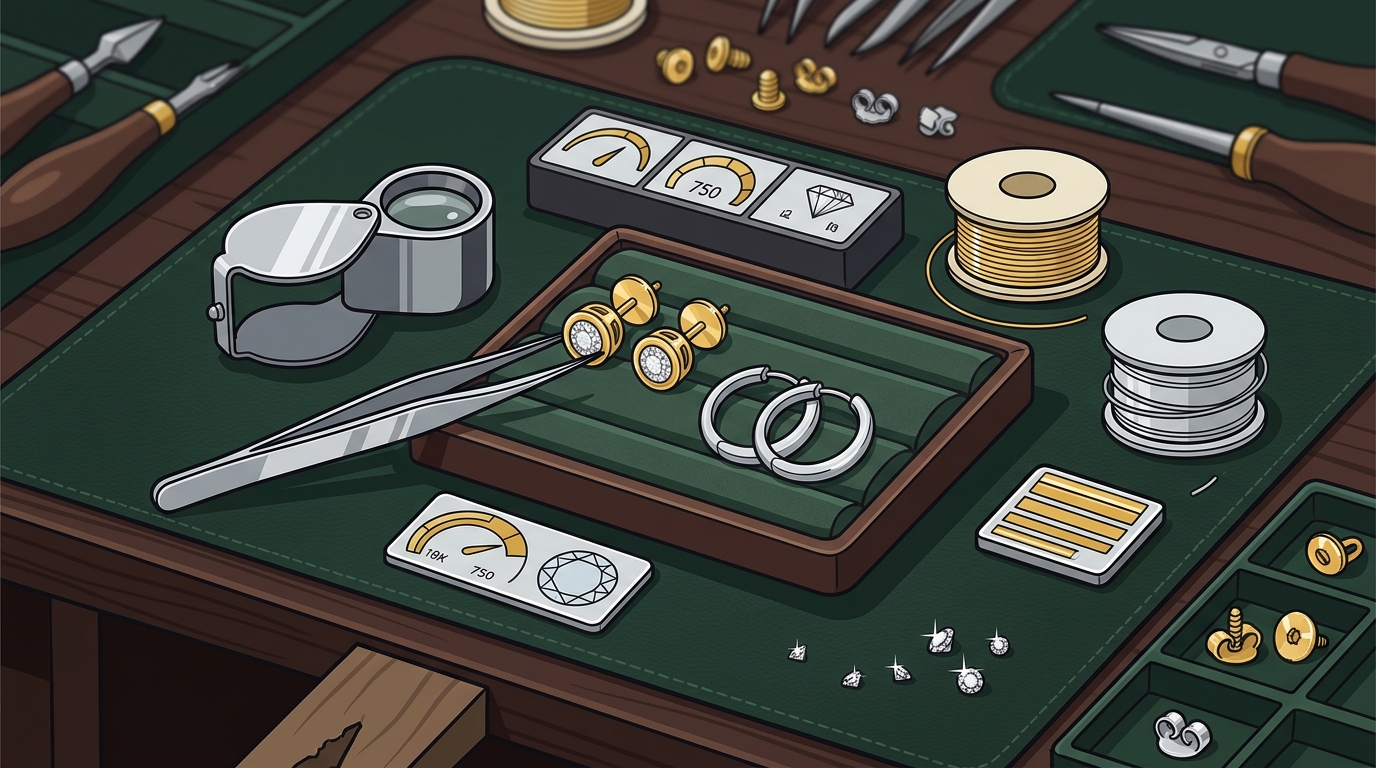
The 4Cs is a grading framework developed by the Gemological Institute of America (GIA) that evaluates diamonds on Cut, Colour, Clarity, and Carat weight. For earrings, cut quality matters most because it controls sparkle and light return visible at conversational distance.
Diamonds vs. Coloured Gemstones
Diamonds remain the most popular choice, but sapphires, rubies, and emeralds offer rich colour and personality. Only these three coloured stones are classified as precious gemstones. Explore the differences in our guide to choosing diamonds or coloured gemstones. For deeper diamond education, review our diamonds and the 4Cs resource.
3. Assess Craftsmanship and Construction
Craftsmanship is the degree of skill and precision applied during the making of a jewellery piece. Look for smooth prong tips, even stone settings, and clean soldering joints. Hand-finished earrings typically have a superior feel and more refined detail compared to cast-only pieces.
A jeweller with decades of experience will produce noticeably tighter tolerances. Joseph George brings over 40 years of traditional European goldsmithing methods to every pair, as detailed on their about page.
4. Choose the Right Earring Style
Different occasions and face shapes call for different silhouettes. Here are the four most popular styles in fine jewellery:
Stud Earrings
A stud earring is a single stone or decorative element mounted directly on a post. Studs are the most versatile style for daily wear and professional settings. Browse diamond stud earrings for classic options.
Huggie and Hoop Earrings
Huggies sit close to the earlobe with a hinged snap closure, providing a secure, low-profile look. Hoop earrings range from small and sleek to bold statement pieces with diamond accents.
Drop Earrings
Drop earrings dangle below the earlobe and work beautifully for formal events. Many designs, like detachable diamond hoops, offer two-in-one versatility for maximum wear.
5. Check Closure and Comfort
The closure type affects both security and comfort. Push-back (butterfly) closures are standard on studs, while screw-back posts offer extra security for high-value stones. Spring-loaded hinged closures on huggies provide a snug fit that stays put during active wear.
Always test the weight balance before purchasing. Heavier earrings should have thicker posts or lever-back mechanisms to distribute weight evenly and prevent earlobe strain.
6. Custom-Made vs. Mass-Produced Earrings
Mass-produced earrings may look appealing initially, but they often lack the individuality and precision of bespoke pieces. Custom earrings let you select specific gemstones, choose metals that suit your skin tone, and incorporate meaningful design elements.
Working directly with a jeweller to create custom earrings also means pieces can become family heirlooms. By choosing timeless designs and high-quality materials, custom earrings hold sentimental and monetary value across generations.
7. Caring for Your Earrings
Even the finest earrings need regular care. Wipe them with a soft cloth after each wear to remove oils and residue. For deeper cleaning, use a mild soap solution, rinse thoroughly, and dry completely before storing.
Store each pair separately in a soft fabric pouch or compartmented jewellery box to prevent scratches. If you notice loose stones or worn prongs, consult a professional jewellery repair service promptly to avoid stone loss.
Key Takeaways
- Always verify metal purity: 18k gold or 950 platinum signals fine-jewellery quality.
- Prioritise diamond cut grade for maximum brilliance in earrings.
- Inspect prong work, soldering joints, and surface finish to gauge craftsmanship.
- Match earring style to your lifestyle: studs for everyday, drops for formal events.
- Choose secure closures like screw-backs or spring-hinged mechanisms for valuable pieces.
- Custom-made earrings offer superior personalisation and long-term heirloom value.
- Clean and store earrings properly to maintain their beauty for decades.
Frequently Asked Questions
What metal is best for sensitive ears?
Platinum (950) is the most hypoallergenic option for earrings. It contains no nickel and is unlikely to cause irritation. 18k yellow gold is also generally safe, while 18k white gold should be checked for nickel content in the alloy.
How do I know if a diamond in an earring is real?
Look for a certificate from a recognised laboratory such as the GIA or AGS. Reputable jewellers hand-pick their stones and provide documentation. Ask to see the diamond grading report before purchasing.
Are custom earrings more expensive than ready-made ones?
Not necessarily. Custom earrings are priced based on materials and labour. Because you choose every component, you control the budget. The added value is a one-of-a-kind piece tailored to your specifications.
What is the difference between huggie and hoop earrings?
A huggie earring is a small hoop that sits snugly against the earlobe with a hinged closure. Hoop earrings are larger, hang further from the ear, and come in a wider range of diameters and thicknesses.
How often should I clean my earrings?
Wipe earrings with a soft cloth after every wear. Perform a deeper clean with mild soap and water every two to four weeks, depending on how frequently you wear them.
What carat weight looks best for stud earrings?
A total carat weight of 0.50ct to 1.00ct provides noticeable sparkle without appearing oversized. For a subtler look, 0.25ct total weight is elegant and comfortable for all-day wear.
Can I upgrade my earring diamonds later?
Many jewellers offer diamond upgrade programs. Check whether your jeweller provides this option at the time of purchase so you can invest in a smaller stone now and upgrade when ready.
How long does it take to make custom earrings?
Bespoke earrings typically take four to five weeks from design approval to completion. The timeline accounts for sourcing stones, crafting the metalwork, setting, and final polishing.
Ready to Find Your Perfect Pair?
Whether you want classic diamond studs or a bespoke design that tells your story, the team at Joseph George in Melbourne's Collins Street can guide you through every decision. Book a consultation today and start creating earrings you will treasure for a lifetime.