

How to Choose the Right Jeweller for Custom Jewellery: 7 Expert Criteria That Matter Most
Commissioning a custom piece of jewellery is one of the most personal purchases you will ever make. Whether it is an engagement ring, a wedding band, or a pendant that commemorates a milestone, the jeweller you choose will shape every detail of the final result. The problem is that many stores claim to offer custom design when, in reality, they simply assemble pre-manufactured components. This guide walks you through seven concrete criteria so you can identify a genuinely skilled custom jeweller and avoid costly mistakes.
1. Verify Genuine Custom Craftsmanship
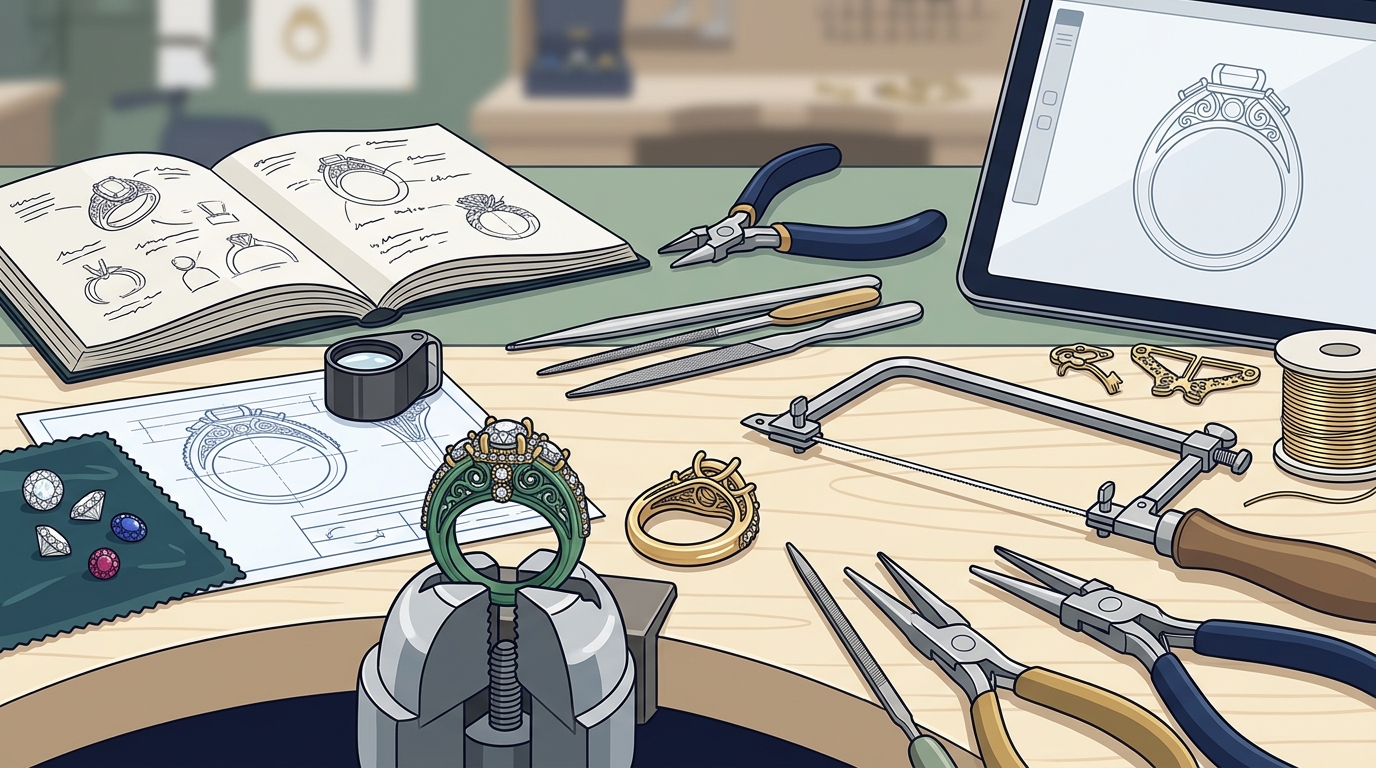
Not every jeweller who advertises \"custom\" actually builds pieces from the ground up. Some simply swap stones or resize stock items. A true custom jeweller either hand-fabricates your piece or uses in-house CAD software to design it from scratch before casting. Ask to see their process: do they create wax models or 3D renderings for your approval before production begins? At Joseph George Jewellery in Melbourne, for example, the bespoke process begins with a free vision session where you share sketches or inspiration images, followed by detailed design sketches before any metalwork starts.
It is also important that CAD work and stone setting happen in-house. When design changes must be relayed to an outsourced company, details get lost and the final piece may not match your vision. Look for jewellers who control the entire workflow under one roof.
2. Assess Experience and Specialisation
Jewellery design is an art form that improves dramatically with decades of practice. A jeweller with extensive experience will have encountered virtually every design challenge and material combination. Joseph George, a second-generation jeweller trained in Europe's finest workshops, brings over 40 years of mastery to every setting and solder joint—an assurance that precision comes standard rather than by luck.
Beyond years of experience, ask about specialisation. Does the jeweller excel at the specific type of piece you need? Someone renowned for engagement rings may not be the best choice for an intricate filigree brooch. Review their portfolio carefully for work that is similar in complexity and style to what you have in mind.
3. Review the Portfolio and Past Client Work
A reputable custom jeweller will be proud to show their previous creations. Photographs are helpful, but seeing finished pieces in person is even better because you can assess surface finish, symmetry, and stone-setting quality up close. Pay particular attention to the diversity of the portfolio—a range of styles from classic solitaires to modern geometric designs signals versatility and genuine skill.
While you are reviewing past work, look at stone setting in particular. Your jeweller should be proficient in multiple setting styles—prong, bezel, pavé, channel, bead setting, and more. Mastery of diverse techniques is a strong indicator of overall craftsmanship.
4. Evaluate Transparency in Pricing and Materials
Custom jewellery is an investment, and your jeweller should be completely upfront about costs. A reputable professional will provide a detailed quote that breaks down the price of metals, gemstones, design labour, and any additional finishing work. Avoid any jeweller who is vague about pricing or pressures you to commit before providing a written estimate.
Joseph George Jewellery keeps business running costs low to offer the highest-quality jewellery at the best possible price, and provides transparent pricing by avoiding mall markups—with no hidden fees in the detailed upfront quote. This kind of straightforward approach protects your budget and builds trust from the very first consultation.
5. Prioritise Ethical Sourcing
Today's buyers increasingly want jewellery that aligns with their values. Conflict-free diamonds, recycled metals, and lab-grown gemstones are all options a responsible jeweller should offer. Ask where they source their stones and metals. A jeweller committed to ethical practices will readily discuss their supply chain and certifications.
At Joseph George, over 80 per cent of metals used are recycled, and diamonds are sourced from Kimberley Process-certified suppliers. They also offer lab-grown diamond options and Fairtrade gold, ensuring that your beautiful piece does not come at an ethical cost.
6. Confirm After-Sale Support and Guarantees
A custom piece should come with long-term care, not just a receipt. Before you commit, ask about warranty coverage, repair policies, resizing, stone replacement, and routine maintenance such as cleaning and prong checks. Custom-designed jewellery will need custom repairs if something goes wrong, so choosing a jeweller who stands behind their work is essential.
Joseph George Jewellery backs every custom piece with a lifetime guarantee on materials and craftsmanship, plus complimentary annual cleanings, prong checks, and polishing. They also offer full restoration services for vintage or heirloom pieces and streamlined insurance replacement processes.
7. Trust the Personal Connection
Custom jewellery is a collaboration between you and your jeweller. The process involves multiple conversations, design revisions, and creative decisions. You need someone who listens carefully, communicates clearly, and makes you feel genuinely heard—not someone who agrees with everything you say without offering professional guidance.
Joseph George works intimately with every client during the design process, sharing extensive knowledge and guiding people within their budget. Customer testimonials consistently highlight this personal touch, with one client noting the experience was "an amazing journey from beginning to end" and another praising how Joseph "covered every aspect possible in the process."
If you cannot visit a studio in person, look for jewellers who offer virtual consultations. Joseph George provides design sessions via Zoom, complete with 3D renderings sent for approval, making the process accessible to interstate and international clients alike.
Key Takeaways
- Demand real custom work: Ensure the jeweller designs and crafts from scratch, not just assembles stock parts.
- Check experience: Decades of hands-on craftsmanship, ideally with formal training, matter more than flashy showrooms.
- Review the portfolio in person: Surface finish, stone setting, and design range tell you everything about skill level.
- Insist on transparent pricing: Get an itemised written quote before any work begins.
- Ask about ethics: Recycled metals, conflict-free diamonds, and supply-chain transparency are non-negotiable today.
- Secure lifetime support: Warranties, cleaning, and repair services protect your investment for years.
- Choose a collaborator: The best jewellers educate you, guide you, and adapt to your evolving vision.
Quick-Reference Checklist: Questions to Ask a Custom Jeweller
- Do you design and manufacture entirely in-house?
- Can I see examples of past custom work similar to what I want?
- What metals and gemstone sources do you use, and are they ethically sourced?
- Will I receive a wax model or 3D rendering for approval before production?
- Can you provide a detailed, itemised quote upfront?
- What is the expected timeline from consultation to completion?
- What warranty, repair, and maintenance services are included?
- Do you offer virtual consultations for remote clients?
Understanding Typical Timelines
Custom jewellery cannot be rushed. Most bespoke pieces take between three and six weeks from approved design to finished product, though highly complex or multi-stone designs may require longer. Always give yourself a buffer of a couple of months between ordering and any event deadline, just in case. Confirm the expected timeline with your jeweller before committing, and ensure milestone updates are part of the agreement.
Frequently Asked Questions
How much does custom jewellery cost compared to off-the-shelf pieces?
Custom pieces can cost more than mass-produced jewellery because they require additional design time and skilled hand labour. However, working with an independent jeweller who avoids retail markups—such as Joseph George in Melbourne—can bring the price closer to, or even below, high-street equivalents while delivering far superior quality and personalisation.
Can I supply my own gemstones or repurpose an heirloom?
Yes. Many custom jewellers welcome heirloom stones, recycled gold, or family pieces that you want to transform into a new design. Joseph George offers full heirloom repurposing, turning inherited diamonds into modern pendants, tennis bracelets, or cluster rings.
What if I do not have a clear design in mind?
A skilled custom jeweller will guide you. Bring inspiration photos, Pinterest boards, or even just a verbal description of the feeling you want, and the jeweller will translate those ideas into design sketches. The consultation stage is specifically designed for collaborative exploration.
Is it possible to commission custom jewellery remotely?
Absolutely. Many jewellers now offer virtual consultations via Zoom or video call, and share 3D renderings digitally for your approval. Joseph George Jewellery serves interstate and international clients this way, ensuring distance is never a barrier to a quality bespoke experience.
How do I verify that a jeweller sources diamonds ethically?
Ask about their certification standards. Reputable jewellers partner with Kimberley Process-certified suppliers and can provide documentation for every stone. Some also offer lab-grown diamonds and Fairtrade gold as additional ethical options.